
por Maria Fernandez Alonso | Mar 21, 2026 | ES, Strategic Management & Industry 4.0
Un Análisis Estructural
La gestión de los riesgos psicosociales representa uno de los catalizadores más significativos del absentismo laboral en las organizaciones catalanas modernas. Este artículo proporciona un análisis estructural de dichos riesgos con un enfoque específico en sus respectivos modelos organizativos. Mediante la categorización del tejido empresarial en tres paradigmas distintos —Pequeñas y Medianas Empresas (Pymes), Grandes Corporaciones y Entidades del Sector Público— este análisis examina cómo las diferentes escalas de operación dictan la implementación de estrategias de salud preventiva. Simultáneamente, identifica las causas raíz del fracaso sistémico dentro de estos marcos jerárquicos.
Estos riesgos suelen manifestarse en culturas corporativas disfuncionales, a menudo exacerbadas por cargas de trabajo individuales excesivas, una variedad de tareas estancada o una percepción de falta de oportunidades de desarrollo profesional. Consecuentemente, estos estresores ponen en peligro no solo el bienestar de la fuerza laboral, sino también la estabilidad fundamental de la organización.
Resulta esencial evaluar el impacto subsiguiente en la productividad corporativa, dado que los factores psicosociales derivan frecuentemente en periodos prolongados de baja. Tales problemas provienen de presiones sistémicas, incluyendo demandas de tareas desproporcionadas, falta de autonomía operativa, ambigüedad de rol y la imposición de horarios de trabajo irregulares o impredecibles.
Pequeñas y Medianas Empresas (Pymes)
Dentro de estas organizaciones, las relaciones profesionales suelen ser directas y las estructuras permanecen horizontales. No obstante, los recursos se encuentran frecuentemente limitados por exigencias técnicas y económicas. Dichas empresas dependen generalmente de servicios de prevención ajenos. En el mejor de los casos, estos servicios realizan auditorías anuales para asegurar el cumplimiento burocrático. Por consiguiente, a menudo no priorizan las evaluaciones integrales de riesgos psicosociales.
Recursos Institucionales para Pymes: Las administraciones públicas proporcionan marcos específicos para las organizaciones que encuentran obstáculos significativos en la gestión de la salud psicosocial. Se pueden encontrar recursos detallados a través del portal oficial del Ministerio de Trabajo y Economía Social. Adicionalmente, la Generalitat de Catalunya ofrece una Guía para la evaluación de los riesgos psicosociales dedicada. Este documento sirve como una herramienta metodológica fundamental para las empresas locales.
Marcos Metodológicos Descargables:
- Guía de Evaluación para Microempresas: Protocolos simplificados diseñados para organizaciones de hasta 25 trabajadores.
- Kit de Gestión de Riesgos para Pequeñas Empresas: Herramientas de evaluación exhaustivas para empresas de 25 o más trabajadores.
- Marco de Cumplimiento para Organizaciones Medianas: Recursos de diagnóstico avanzados para entidades que superan los 50 trabajadores.
Riesgos Primarios en Modelos de Pequeña Escala:
- Ambigüedad de Rol: Los empleados asumen frecuentemente responsabilidades que exceden sus descripciones de puesto formales. Este solapamiento genera una carga cognitiva excesiva.
- Sobrecarga Operativa: Una plantilla limitada dicta que la ausencia de un solo individuo impacte drásticamente en el colectivo. Esta interdependencia intensifica las presiones temporales.
- Intrusismo en la Vida Privada: La proximidad a la propiedad resulta a menudo en una cultura de disponibilidad total. Tales expectativas invaden frecuentemente la esfera privada.
Vulnerabilidades Estructurales en las Pymes: Este modelo organizativo constituye aproximadamente el 85% del tejido empresarial catalán. Sin embargo, fracasa a menudo en la gestión de riesgos porque la prevención se percibe como un formalismo administrativo. Los imperativos estratégicos de salud rara vez son la prioridad. Además, los conflictos se median frecuentemente a través de prismas emocionales en lugar de protocolos profesionales. Esta falta de formalidad dificulta la resolución del acoso o de las malas prácticas directivas.
Grandes Corporaciones y Gestión de Riesgos Psicosociales
Las organizaciones a gran escala se caracterizan por estructuras jerárquicas de alcance nacional o multinacional. Estas entidades mantienen generalmente departamentos de prevención propios. Habitualmente, estos servicios implementan programas de «Empresa Saludable». También establecen protocolos sofisticados diseñados para garantizar la desconexión digital y mitigar el acoso.
Riesgos Primarios en Modelos a Gran Escala:
- Erosión de la Autonomía: Los procesos estandarizados pueden llevar a los empleados a sentirse despersonalizados. Este entorno resulta a menudo en una sensación de alienación respecto a su contribución profesional.
- Inseguridad Laboral Percibida: Los riesgos provienen frecuentemente de reorganizaciones estructurales o fusiones. Los cambios estratégicos decididos en sedes distantes exacerban aún más esta incertidumbre.
- Competitividad Sistémica: Las métricas de desempeño vinculadas a incentivos financieros pueden erosionar el apoyo social. Además, estos sistemas fomentan a menudo fricciones interpersonales.
Barreras para una Prevención Corporativa Eficaz: Las grandes corporaciones no son una excepción a la regla; la mayoría no logra gestionar los riesgos psicosociales de manera efectiva. Esta deficiencia surge de dos factores primarios:
- La Burocratización de la Prevención: Se realizan evaluaciones complejas, pero los resultados se estancan a menudo en los comités de seguridad y salud. Las mejoras reales en el lugar de trabajo rara vez se manifiestan.
- Desconexión Estratégica: El liderazgo permanece distanciado de la realidad operativa diaria de la fuerza laboral. Como resultado, el apoyo social percibido se vuelve ineficaz.
Entidades del Sector Público
Finalmente, las organizaciones públicas reflejan funcionalmente a las grandes corporaciones. Se distinguen por una rigidez normativa significativa y la inestabilidad inherente del panorama político. A pesar de poseer protocolos formales robustos, estas entidades exhiben altos niveles de agotamiento profesional (burnout).
Riesgos Primarios en el Sector Público:
- Estancamiento Jerárquico: Los procedimientos administrativos inflexibles ahogan a menudo la iniciativa individual. Esto conduce a un profundo sentido de indefensión aprendida.
- Dualidad Administrativa: Los empleados enfrentan prioridades conflictivas entre objetivos técnicos a largo plazo y agendas políticas a corto plazo.
- Trabajo Emocional: El personal de primera línea está expuesto a una alta demanda social. Ocasionalmente, la agresión verbal por parte del público agota significativamente la resiliencia emocional.
El Fracaso de la Prevención Pública: La gestión de la salud psicosocial en la esfera pública se ve comprometida por la «Ilusión Normativa». Existe una tendencia a confundir la existencia de una regulación con la resolución real de un problema. Adicionalmente, suele existir un Vacío de Liderazgo. Los sistemas de promoción basados en la antigüedad en lugar de la competencia directiva resultan en líderes que carecen de inteligencia emocional. Finalmente, la Desalineación Crónica de Recursos asegura que las medidas correctivas queden paralizadas por la complejidad de la contratación pública.
Conclusión: Inversión Estratégica vs. Cumplimiento Legal
En conclusión, el fracaso en la gestión de los riesgos psicosociales dentro del panorama empresarial catalán rara vez es consecuencia de una ausencia legislativa. Por el contrario, es un síntoma de desalineación estructural y cultural. Ya sea a través de la informalidad emocional de las Pymes, la inercia burocrática de las corporaciones o la rigidez normativa del sector público, la prevención permanece como un nivel administrativo secundario.
Para revertir los índices crecientes de absentismo, las organizaciones deben transitar de un modelo de «protección legal» hacia uno de «inversión estratégica». El desapego profesional solo disminuirá cuando el capital humano deje de ser visto como un mero recurso técnico. En última instancia, la sostenibilidad de las organizaciones modernas depende de reconocer a la fuerza laboral como una entidad social compleja. Mientras que la estructura proporciona el marco para el riesgo, el elemento humano sigue siendo la frontera final para una transformación genuina.
Se puede leer la versión en inglés del análisis estructural.
CRÉDITOS:
SEO: Imagen estructural generada en colaboración con Gemini AI (Google).

por Maria Fernandez Alonso | Mar 21, 2026 | EN, Strategic Management & Industry 4.0
A Structural Analysis
Management of Psychosocial Risks represents one of the most significant catalysts for workplace absenteeism within modern Catalan organisations. This article provides a structural analysis of these risks with a specific focus on their respective organisational models. By categorising the business fabric into three distinct paradigms—Small and Medium-sized Enterprises (SMEs), Large Corporations, and Public Sector Entities—this analysis examines how different scales of operation dictate the implementation of preventive health strategies. Simultaneously, it identifies the root causes of systemic failure within these hierarchical frameworks.
These risks typically manifest within dysfunctional corporate cultures, often exacerbated by excessive individual workloads, stagnant task variety, or a perceived lack of professional development opportunities. Consequently, these stressors jeopardise not only the well-being of the workforce but also the fundamental stability of the organisation.
In this regard, it is essential to evaluate the subsequent impact on corporate productivity, as psychosocial factors frequently result in protracted periods of leave. Such issues derive from systemic pressures, including disproportionate task demands, a lack of operational autonomy, role ambiguity, and the imposition of irregular or unpredictable working hours.
Small and Medium-sized Enterprises (SMEs)
Within these organisations, professional relationships are typically direct and structures remain flat. However, resources are frequently constrained by technical and economic exigencies. Such companies generally rely on external prevention services. In the best-case scenario, these services conduct annual audits to ensure bureaucratic compliance. Consequently, they often fail to prioritise comprehensive psychosocial risk assessments.
Institutional Resources for SMEs Public administrations provide specific frameworks for organisations that encounter significant obstacles in managing psychosocial health. Detailed resources can be found via the Ministerio de Trabajo y Economía Social official portal. Additionally, the Generalitat de Catalunya provides a dedicated Guia per a l’avaluació dels riscos psicosocials. This document serves as a fundamental methodological tool for local businesses.
Downloadable Methodological Frameworks:
Primary Risks in Small-Scale Models
- Role Ambiguity: Employees frequently undertake responsibilities exceeding their formal job descriptions. This overlap generates an excessive cognitive load.
- Operational Overload: A limited headcount dictates that the absence of a single individual drastically impacts the collective. This interdependence intensifies time pressures.
- Work-Life Intrusiveness: Proximity to ownership often results in a culture of total availability. Such expectations frequently encroach upon the private sphere.
Structural Vulnerabilities in SMEs This organisational model constitutes approximately 85% of the Catalan business. Nevertheless, it often fails in risk management because prevention is perceived as an administrative formality. Strategic health imperatives are rarely the priority. Furthermore, conflicts are frequently mediated through emotional lenses rather than professional protocols. This lack of formality hinders the resolution of harassment or managerial malpractice.
Large Corporations and Management of Psychosocial Risks
Large-scale organisations are characterised by hierarchical structures of national or multinational scope. These entities generally maintain internal prevention departments. Typically, these services implement «Healthy Workplace» programmes. They also establish sophisticated protocols designed to guarantee digital disconnection and mitigate harassment.
Primary Risks in Large-Scale Models
- Erosion of Autonomy: Standardised processes can lead employees to feel depersonalised. This environment often results in a sense of alienation from their professional contribution.
- Perceived Job Insecurity: Risks frequently stem from structural reorganisations or mergers. Strategic shifts decided in distant headquarters further exacerbate this uncertainty.
- Systemic Competitiveness: Performance metrics linked to financial incentives can erode social support. Moreover, these systems often foster interpersonal friction.
Barriers to Effective Corporate Prevention Large corporations are no exception to the rule; the majority fail to manage psychosocial risks effectively. This deficiency arises from two primary factors:
- The Bureaucratisation of Prevention: Complex assessments are conducted, yet results often stagnate within health and safety committees. Real workplace improvements rarely manifest.
- Strategic Disconnect: Leadership remains detached from the daily operational reality of the workforce. As a result, perceived social support becomes ineffective.
Public Sector Entities
Finally, public organisations functionally mirror large corporations. They are distinguished by significant regulatory rigidity and the inherent instability of the political landscape. Despite possessing robust formal protocols, these entities exhibit high levels of burnout.
Primary Risks in the Public Sector
- Hierarchical Stagnation: Inflexible administrative procedures often stifle individual initiative. This leads to a profound sense of learned helplessness.
- Administrative Duality: Employees face conflicting priorities between long-term technical objectives and short-term political agendas.
- Emotional Labour: Front-line staff are exposed to high social demand. Occasionally, verbal aggression from the public significantly depletes emotional resilience.
The Failure of Public Prevention The management of psychosocial health in the public sphere is compromised by the «Normative Illusion.» There is a tendency to confuse the existence of a regulation with the actual resolution of a problem. Additionally, a Leadership Vacuum often exists. Promotional systems based on seniority rather than managerial competence result in leaders who lack emotional intelligence. Finally, Chronic Resource Misalignment ensures that corrective measures are paralysed by the complexity of public procurement.
Conclusion: Strategic Investment vs. Legal Compliance
In conclusion, the failure to manage psychosocial risks within the Catalan business landscape is rarely a consequence of legislative absence. Instead, it is a symptom of structural and cultural misalignment. Whether through the emotional informality of SMEs, the bureaucratic inertia of corporations, or the normative rigidity of the public sector, prevention remains a secondary administrative tier.To reverse the escalating indices of absenteeism, organisations must transition from a model of «legal protection» to one of «strategic investment.» Professional disengagement will only decrease when human capital is no longer viewed as a mere technical resource. Ultimately, the sustainability of modern organisations depends on recognising the workforce as a complex social entity. While the structure provides the framework for risk, the human element remains the final frontier for genuine transformation.
A Spanish version of this structural analysis is available.

por Maria Fernandez Alonso | Ene 23, 2026 | EN, Strategic Management & Industry 4.0
A biological study
Tree anatomy for timber engineering represents the essential scientific foundation for sustainable construction and high-performance. Professional understanding of wood morphology ensures superior material efficiency. This updated 2026 study explores the macroscopic layers necessary for advanced structural applications.
(más…)
por Maria Fernandez Alonso | Ene 17, 2026 | EN, Strategic Management & Industry 4.0
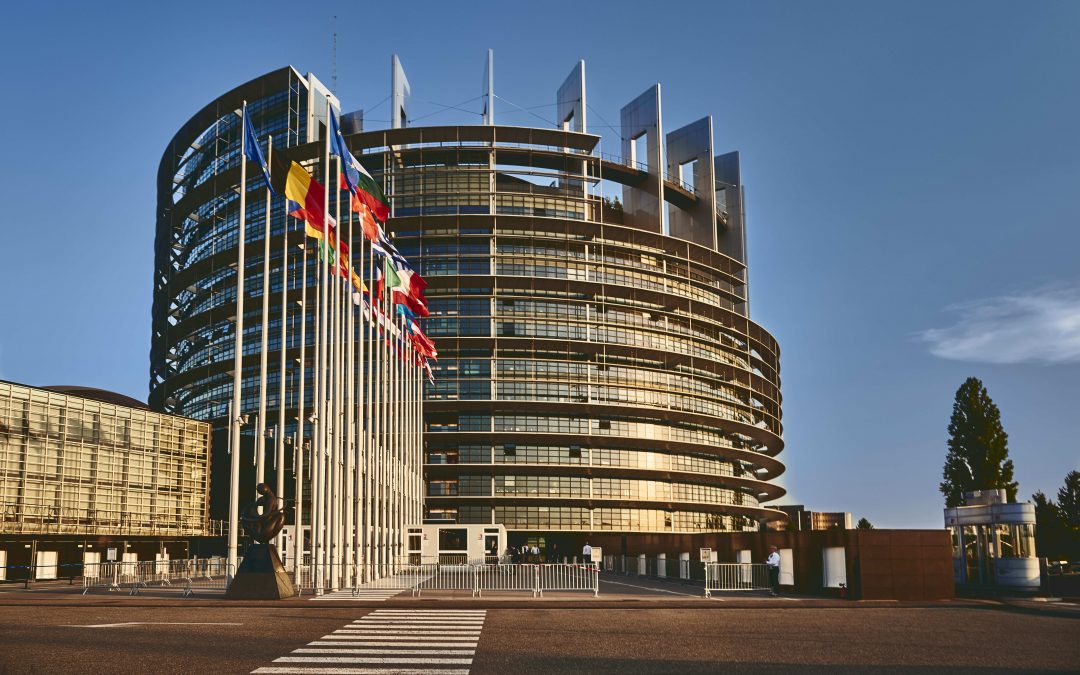
Analysis of the impact of the EU-Mercosur agreement from 3 perspectives: geopolitics, detractors and proponents.
The present article explores several dimensions of the impact of the EU-Mercosur trade agreement, evaluating its impact on European strategic autonomy and industrial competitiveness through the analysis of the following core issues:
- Geopolitical Analysis of the impact of the EU-Mercosur and Economic Realignment
- Agrarian opposition: Analysis of the impact of the EU-Mercosur and regulatory asymmetry
- Industrial supporters: Analysis of the impact of the EU-Mercosur and market liberalization
1. Geopolitical Analysis of the impact of the EU-Mercosur and Economic Realignment
The global economic landscape is currently defined by the growing rivalry between the United States and China.The EU-Mercosur agreement establishes a free trade zone encompassing more than 720 million consumers. The EU-Mercosur agreement repositions Europe as a relevant global actor at a time of intense geopolitical competition not only between these two powers but also against Russia.
China has dominated trade for decades. Consequently, Europe gains a degree of independence it would not otherwise possess. China has also been growing fast and not only represents a great EU competitor, also to Europe. As China expands, it is becoming an important trading partner for Brazil and Argentina, threatening European dependence on essential raw materials such as lithium or graphite.
The United States has historically been a leader in the Western Hemisphere, but its presence in the Latin American market has remained irregular. Moreover, Trump’s administration is applying protectionist trade measures against most countries, including the EU, which is experiencing a loss of competitiveness in the American market due to tariffs upon European exports. In this sense, opening borders with Latin America benefits numerous sectors, such as the automotive, chemical and pharmaceutical, and machinery industries, among others industrial sectors. Therefore, this deal represents a necessary counterbalance to ensure that European industries maintain access to essential raw materials without compromising their strategic position.
Besides China and the US, it is important to look into Russia-EU conflicts and how they affect Western supremacy. Recent conflicts, such as the war in Ukraine and the interest in acquiring Greenland by the Trump Administration, have a geopolitical background linked to the control of strategic natural resources. This includes energy resources such as gas, of which Russia is the world’s second-largest exporter. Russia is also the world’s leading exporter of fertilizers, with Brazil among other countries including members of the Union. Some of these products face strict restrictions on the oldest Continent due to their environmental impact. In economic terms, Ursula von der Leyen, the European commission president, has claimed that tariffs will be imposed on the exporter countries if European standards are not met. Last, but not least, this agreement allows us not only to gain economic influence but also to promote global sustainability and strategic independence.
2. Agrarian opposition: Analysis of the impact of the EU-Mercosur and regulatory asymmetry
Agrarian sectors across Europe have shown significant opposition, characterizing the treaty as a catalyst for unfair competition. The fundamental grievance stems from regulatory asymmetry: while European producers adhere to the world’s most stringent environmental and animal welfare standards, Mercosur counterparts often utilize pesticides and antibiotics banned within the Union.
Protests across Europe are perceived as a response to an existential threat, particularly taking as a reference how French and Spanish producers have been displaced in European markets by the introduction of vegetables and fish products from Morocco. This precedent has generated a collective skepticism among farmers regarding the future of the agricultural sector, which is threatened not only by a lack of generational renewal but also by the difficulty of remaining competitive while facing unfair competition.
Agricultural producers complain against social and environmental dumping, as local producers must comply with a stricter regulatory framework, while importers can operate with less bureaucracy and without the plant-health measures or veterinary drugs banned in the EU.
Detractors also emerge from an environmental perspective, citing the carbon footprint generated by long-distance imports and the perceived risk of deforestation, which jeopardizes the Paris Agreement. In theory, compliance with the EU Deforestation Regulation (EUDR) is non-negotiable. Time will tell whether these good practices are implemented correctly or simply become another bureaucratic formality.
3. Industrial supporters: Analysis of the impact of the EU-Mercosur and market liberalization
Large European companies—industrial, automotive, pharmaceutical, service, and machinery—strongly support the EU-Mercosur agreement, as they stand to be its primary beneficiaries.
Key advantages:
- Elimination of tariffs in South American markets and cost savings. According to the European Commission, the automotive, machinery, chemical, and pharmaceutical industries are expected to save more than €4 billion annually in tariffs, facilitating competition with their US counterparts.
- Access to certain agricultural products, such as luxury French wine, or products with protected designations of origin, such as Manchego cheese.
- The opening of public procurement markets represents a significant opportunity for European firms to compete for government contracts under the same conditions as domestic companies.
- Increased business opportunities for companies in the telecommunications (Telefónica), transportation and infrastructure (Ferrovial), financial services (Santander), and construction sectors—in other words, companies listed on the IBEX 35.
Consequently, in general terms, large corporations see the agreement as an opportunity to increase their exports to a market of 300 million consumers. Furthermore, it improves their global competitiveness in an environment protected from powers like China and the US.

por Maria Fernandez Alonso | Ene 10, 2026 | EN, Strategic Management & Industry 4.0
Gaudí had a profound relationship with wood. He used it as a building material and also, as primary element in interior design, furniture, and decorative items.
A clear example of the use of wood in interior design can be found in Casa Batlló, where visitors can admire the extensive use of carved wood with ergonomic and organic forms. The wooden doors, moldings, railings, and coffered ceilings feature undulating shapes inspired by the sea.
Gaudí’s interiors were not only beautiful but also ergonomic and functional. Wood dampens sound and prevents harsh reverberations. Furthermore, it is a warm material to the touch and has good insulating properties, making it highly practical for homes.
Wood is a lightweight material that allowed Gaudí to create functional furniture. He designed comfortable, human-centered furniture, although some of the pieces he created have been removed from their original placement by owners who found them uncomfortable. These are now valuable museum pieces.
Gaudí used wood to create warmth in his designs. Furthermore, being deeply committed to integrating nature into his works, wood represented an essential and exclusive organic element. When we contemplate wood, we appreciate that each grain is unique, generating a feeling of exclusivity in his clients who belong to the Catalan upper bourgeoisie.
The malleability of wood makes it easy to work, bend, shape, assemble, and join without losing strength. This characteristic allows for the creation of organic forms, smooth surfaces, and intricate details that would be impossible in stone or metal.
“Wood is the most affectionate of materials: it holds the warmth of the sun and the memory of the forest.”
Henry David Thoreau – Walden (1854)
Gaudí also used wood in timber structures. A clear example of this can be found in the Gaudí warehouse in Mataró – which I visited with students from the Timber Construction Course and also, as part to the «Parlem de Fusta… a Mataró» prelude (Let’s Talk About Wood… in Mataró) event organized by the commercial department of Gremi Fusta i Moble, held at the FAGEM headquarters in February 2018.
This large warehouse for the textile cooperative in 1183. It is the first work designed and built by Gaudí, and it already demonstrates his interest in parabolic forms, which he would later develop with other materials. The Building structure is supported by parabolic wooden arches.
Wood possesses natural elasticity that absorbs vibrations and deformations without breaking. For this reason, it is ideal both for the parabolic curves of the Mataró warehouse and for elements that withstand continuous use; e.g., doorknobs, railings, chairs.
Before concluding, I would like to emphasize that Gaudí knew how to make efficient use of wood, an accessible, locally sourced, renewable material, compatible with Catalan artisanal traditions and a carbon sink. It is therefore essential that we rediscover Gaudí’s artistic language to give wood the noble position it deserves.
Credits:
AI-generated conceptual study of Gaudí-inspired woodwork, created by Gemini (Google).

por Maria Fernandez Alonso | Dic 20, 2025 | ES, Strategic Management & Industry 4.0
Más allá de la emoción, el cierre de las ventas B2B se consigue con la racionalidad. B2B Sales: Why Logic Outperforms Emotion in Closures?
En mi post Semántica del branding analice la semántica del branding B2C, hoy quiero abordar el porqué las emociones no funcionan en las vendad B2B y lo haré, también, desde mi propia experiencia comercial en el cierre de este tipo de ventas.
El perfil técnico de mis clientes B2B
En mi realidad profesional el cierre de una venta no depende del grado de satisfacción emocional, sino de la capacidad de solucionar problemas, garantizar la rentabilidad y la visión de desarrollo de negocio.
Mis ventas están enfocadas a un perfil técnico: arquitectos, ingenieros, directores de marketing o comerciales, gerentes… a quienes hay que demostrarles que con las acciones publicitarias propuestas conseguirán objetivos como por ejemplo:
– Obtener visibilidad cualificada. Es decir, la posibilidad de conectar, de hacer contactos que les permitirán el desarrollo de su negocio.
– Obtener autoridad. En otras palabras, posicionarse como un referente experto en un mercado altamente competitivo.
– Ahorrar tiempo . Liberar tiempo de la empresa de tareas que pueden ser realizadas externamente. Así como optimizar desplazamientos destinados a gestión comercial que se pueden multiplicar al asistir a un evento.
La gramática de la inversión
Mi día a día me ha enseñado que un cliente B2B quiere tener claro cada euro que invierte en multiplicar su red de contactos profesionales, en posicionar su marca, en acelerar el desarrollo de su negocio y conseguir este objetivo es derribar una barrera que se interpone entre la emoción y el raciocinio.
Por lo tanto, el branding B2B tiene como objetivo generar confianza y justificar la inversión y en términos de marketing debe centrarse en el ROI (return on investment) y en los costes.
En consecuencia, el léxico elegido se debe centrar en términos de beneficios. El coste operativo que el cliente destina a la solución que le aporta la propuesta económica de marketing se debe traducir en inversión a corto, medio o largo plazo.
Verbos esenciales en el léxico de la racionalidad
En B2B vendemos con la gramática de la inversión. Esto significa que abandonaremos la semántica de la emoción empleada en B2C y centraremos nuestros esfuerzos en el sujeto empresarial. Para lograr nuestro objetivo, usaremos verbos de acción directa y cuantificables que muestren al cliente, el mecanismo de retorno mediante una fórmula racional.
Los verbos del argumentario comercial giran en torno de los siguientes conceptos clave:
(1) Resultados financieros. Serán útiles cuando nuestro objetivo sea abordar resultados financieros. Verbos como por ejemplo «Optimizar», «reducir»,»ahorrar» o»escalar» hablan directamente con gerencia.
(2) Eficacia. Eliminan la complejidad. «Integrar», «garantizar» y «simplificar» funcionan bien cuando se quiere o facilitar el proceso para conseguir objetivos prefijados.
Conclusión: verbos que cierran ventas
En conclusión, las ventas B2B no tienen como objetivo despertar emociones para satisfacer una necesidad; sino que se debe convencer de que la solución vendida influirá positivamente y de forma medible en la cuenta de resultados del cliente.