
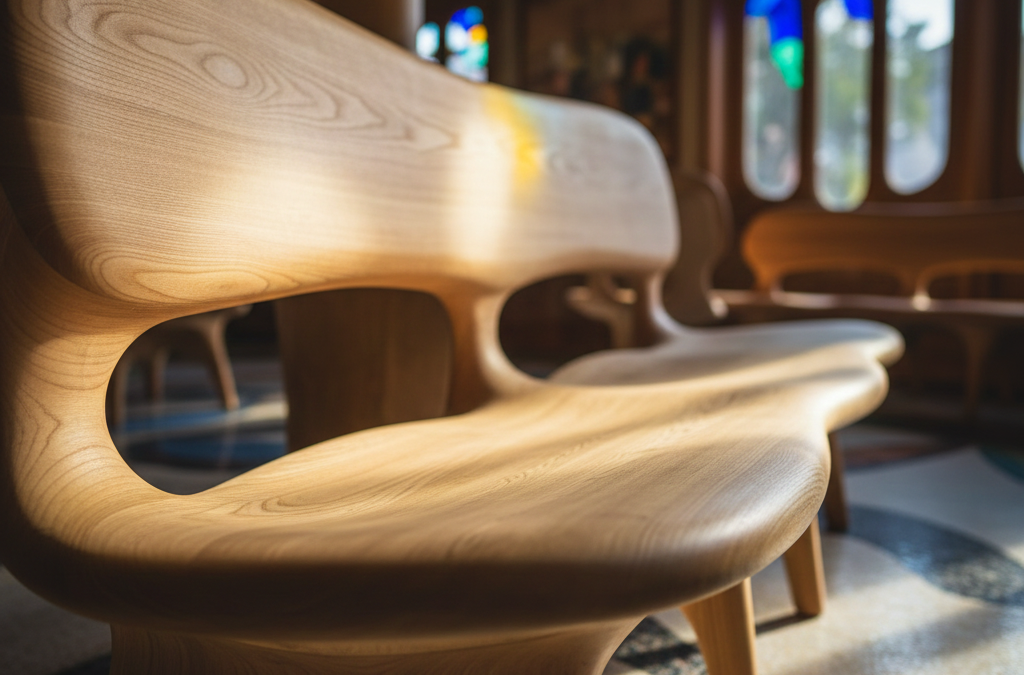
Gaudí had a profound relationship with wood. He used it as a building material and also, as primary element in interior design, furniture, and decorative items.
A clear example of the use of wood in interior design can be found in Casa Batlló, where visitors can admire the extensive use of carved wood with ergonomic and organic forms. The wooden doors, moldings, railings, and coffered ceilings feature undulating shapes inspired by the sea.
Gaudí’s interiors were not only beautiful but also ergonomic and functional. Wood dampens sound and prevents harsh reverberations. Furthermore, it is a warm material to the touch and has good insulating properties, making it highly practical for homes.
Wood is a lightweight material that allowed Gaudí to create functional furniture. He designed comfortable, human-centered furniture, although some of the pieces he created have been removed from their original placement by owners who found them uncomfortable. These are now valuable museum pieces.
Gaudí used wood to create warmth in his designs. Furthermore, being deeply committed to integrating nature into his works, wood represented an essential and exclusive organic element. When we contemplate wood, we appreciate that each grain is unique, generating a feeling of exclusivity in his clients who belong to the Catalan upper bourgeoisie.
The malleability of wood makes it easy to work, bend, shape, assemble, and join without losing strength. This characteristic allows for the creation of organic forms, smooth surfaces, and intricate details that would be impossible in stone or metal.
“Wood is the most affectionate of materials: it holds the warmth of the sun and the memory of the forest.”
Henry David Thoreau – Walden (1854)
Gaudí also used wood in timber structures. A clear example of this can be found in the Gaudí warehouse in Mataró – which I visited with students from the Timber Construction Course and also, as part to the «Parlem de Fusta… a Mataró» prelude (Let’s Talk About Wood… in Mataró) event organized by the commercial department of Gremi Fusta i Moble, held at the FAGEM headquarters in February 2018.
This large warehouse for the textile cooperative in 1183. It is the first work designed and built by Gaudí, and it already demonstrates his interest in parabolic forms, which he would later develop with other materials. The Building structure is supported by parabolic wooden arches.
Wood possesses natural elasticity that absorbs vibrations and deformations without breaking. For this reason, it is ideal both for the parabolic curves of the Mataró warehouse and for elements that withstand continuous use; e.g., doorknobs, railings, chairs.
Before concluding, I would like to emphasize that Gaudí knew how to make efficient use of wood, an accessible, locally sourced, renewable material, compatible with Catalan artisanal traditions and a carbon sink. It is therefore essential that we rediscover Gaudí’s artistic language to give wood the noble position it deserves.
Credits:
AI-generated conceptual study of Gaudí-inspired woodwork, created by Gemini (Google).