
por Maria Fernandez Alonso | Ene 31, 2026 | Language & Culture
El edadismo, según definición de la RAE, es la discriminación por razón de edad, especialmente hacia persona cuya edad cronológica se considera avanzada. En los procesos de selección de personal el factor edad se convierte en un filtro sistemático de eliminación de candidaturas empleando criterios como el año de nacimiento, la nomenclatura de los títulos académicos, el formato de las plataformas. Este tipo de criterios afectan tanto a jóvenes como seniors con experiencia. Lamentablemente, estas prácticas representan un considerable desperdicio de talento en la gestión estratégica de recursos humanos.
¡Hola, buenos días!
Buenos días, ¿nos conocemos?
Sí, soy aquella persona que hace 25 años me solicitaba 5 años de experiencia para una candidatura “junior”…
¡Ah! ¿Y en qué puedo ayudarle ahora?
Sólo quería hacerle notar que tengo esos 5 años de experiencia y 20 más y que ahora me descarta por ser una persona demasiado vieja para una candidatura senior.»
Los argumentos expuestos en este artículo se fundamentan en una trayectoria profesional vinculada a la experiencia adquirida como responsable de contratación en Liderlimp S.L., unida a casi una década en la patronal Gremi Fusta i Moble. donde estoy permanente en contacto con empresarios del sector de la madera que me trasladan sus inquietudes en este aspecto. Ambas experiencias me han proporcionado una visión privilegiada sobre la preocupante falta de relevo generacional y la degradación del criterio de selección. Este panorama motiva el análisis de un mercado laboral que, en 2026, sigue operando bajo prejuicios que el marco legal prohíbe explícitamente.
Marco legal
El artículo 14 de la Constitución Española, aprobada en referéndum en 1978, estipula lo siguiente:
«Los españoles son iguales ante la ley, sin que pueda prevalecer discriminación alguna por razón de nacimiento, raza, sexo, religión, opinión o cualquier otra condición o circunstancia personal o social.»
La Ley 15/2022, de 12 de julio, prohíbe explícitamente la discriminación por edad como criterio en el acceso al empleo por cuenta ajena. Consecuentemente, ningún candidato debería ser descartado por su juventud o por su dilatada experiencia profesional.
Artículo 2. Punto 1:
«Se reconoce el derecho de toda persona a la igualdad de trato y no discriminación con independencia de su […] edad […] o cualquier otra condición o circunstancia personal o social.»
Artículo 9. Punto 1:
«No podrán establecerse limitaciones, segregaciones o exclusiones para el acceso al empleo por cuenta ajena, incluidos los criterios de selección […] por razón de alguno de los motivos previstos en esta ley.»
Artículo 9. Punto 3: ««Los servicios públicos de empleo, sus entidades colaboradoras y las agencias de colocación o entidades autorizadas deberán velar por la ausencia de criterios e indicadores de edad que puedan dar lugar a discriminaciones en el acceso al empleo.»
Cómo se refleja el edadismo en la realidad del mercado laboral 2026
El edadismo en la selección de personal opera, fuera del marco legal, como un mecanismo de discriminación aplicado constantemente por los profesionales encargados el proceso de preselección. Diversos ejemplos manifiestan esta realidad que no es perseguida por las autoridades ni tampoco denunciada por las víctimas:
- Portales de empleo como Infojobs requieren la edad para el alta en la aplicación. Este campo obligatorio debería ser eliminado de ésta o cualquier otra plataforma como pueden ser webs corporativas que también solicitan la fecha de nacimiento en sus formularios de registro.
- Los modelos de CV digitales son cronológicos, es decir, que exigen citar años de obtención de títulos o periodos exactos de trabajo.
- Plataformas digitales que solicitan la subida de una fotografía de perfil.
Informar del año de nacimiento, los periodos de titulación o subir una foto refleja la discriminación por edadismo en la selección de personal. Además, condiciona la fase de preselección ejecutada, a menudo, en apenas tres segundos.
La evaluación objetiva de los candidatos requeriría una metodología ciega efectuada por técnicos experimentados en cada campo de especialidad. Actualmente, la mayoría de seleccionadores son psicólogos o graduados en relaciones laborales que poseen conocimientos de gestión de recursos humanos, pero que no siempre disponen de facultades adecuadas para valorar capacidades técnicas y competencias transversales. Esta falta de criterio técnico explica por qué se recurre a filtros superficiales (edad, foto, títulos) en lugar de analizar la solvencia profesional.
Análisis de la situación del proceso de selección
La sobresaturación del mercado laboral en el que compiten recién titulados, perfiles internacionales y parados de diversa duración DEBERÍA REPRESENTAR una ventaja estratégica para los técnicos en selección. Estos profesionales tendrían que dedicar más de tres segundos a cada perfil para obtener una visión global antes de la contratación.
Cómo la títulitis es un espejo del edadismo en el proceso de selección
La titulitis constituye una de las mayores evidencias de la ineptitud técnica en los procesos de selección. Esta fijación académica, amparada a menudo por las Administraciones públicas, fomenta un edadismo indirecto mediante criterios obsoletos:
- La distinción Licenciado/Graduado: Filtrar por «Grado» supone un descarte generacional encubierto tras la implantación del Plan Bolonia.
- La priorización de ADE: Este criterio descarta injustamente a emprendedores cuya gestión real de negocios supera en valor a cualquier titulación teórica.
Actualmente, existe un clara divergencia entre poseer un título y la calidad formativa. La necesidad de rentabilizar económicamente las universidades ha contribuido ampliamente, revertiendo en una devaluación académica durante las últimas tres décadas, afectando tanto al nivel de esfuerzo como a la profundidad didáctica.
El edadismo en la selección de personal a través del análisis intergeneracional
Las distintas generaciones integran el mercado laboral bajo el estigma de la discriminación global:
- Los Baby Boomers (Antes de 1964): Representan el capital intelectual infravalorado por la supuesta brecha digital. Son esenciales para garantizar la transferencia de conocimiento.
- La Generación X o séniors (1965-1980): Constituyen motores operativos discriminados por cargas familiares y edadismo. Son excluidos en favor de alternativas más económicas con menor compromiso.
- Los Millennials (1981-1996): Atraviesan la crisis de la mediana carrera laboral. Son la generación titulada víctima de altos índices de estrés y rotación por búsqueda de propósito.
- La Generación Z (1997-2012): Definen el talento líquido. Según el Observatorio de las Ocupaciones del SEPE y la CEOE, este colectivo presenta una alta tasa de rotación voluntaria durante el primer año, eliminando cualquier retorno sobre la inversión en formación.
Conclusiones sobre el edadismo en la selección de personal
Los procesos de selección podrían ser equiparados a una quiniela truncada en la que el factor suerte tiene un peso importante. Actualmente, los procesos de selección priorizan una lógica binaria de cumplir o no cumplir determinados filtros excluyentes de una tercera variable: la de las competencias transversales frente al reduccionismo académico, la edad y otro tipo de sesgos. Los responsables de contratación asumen erróneamente que la saturación de aspirantes permitirá acertar en el proceso por azar. Sin embargo, este método incide negativamente en la rentabilidad que la experiencia consolidada aporta a las empresas.
En otras palabras, los actuales procesos de selección provocan una pérdida directa de competitividad e incrementan el coste económico de formación derivado de la rotación empresarial. Ignorar la idoneidad técnica debería ser un factor a subsanar para realizar contrataciones acertadas y duraderas. Además, sería esencial que los responsables de selección estuviesen al corriente de las señales de alerta de entidades como el SEPE o las patronales.
Finalmente, un pequeño inciso y, simultáneamente, un llamamiento al respeto por las personas por parte de los seleccionadores que no sólo no revierten una situación que para ellos es cómoda en su procedimiento de trabajo sino que además, la deshumanizan a través de su falta de respuesta personalizada, el uso de notificaciones automáticas o el «descartado» en algunas de las plataformas de profesionales válidos. Recuperar ese factor de humanidad que debería de caracterizarlos juntamente con el rigor técnico es más que pura cortesía, es un imperativo para la excelencia empresarial.
Créditos y agradecimientos:
Agradezco a Isaac Esteban – estudiante de Derecho y Relaciones Internacionales en la UAB – la revisión del marco legal de este artículo.
La fotografía destacada es una imagen cl de Freepik

por Maria Fernandez Alonso | Ene 30, 2026 | Strategic Communications
Reaching audience requires understanding. This post demonstrates why a positive narrative outperforms the traditional language of guilt in environmental storytelling. Capturing human attention demands a strategic shift; therefore, clarity must be the priority in any communication effort. What follows is a disruptive dialogue between two of Earth’s most essential stakeholders: Water and Wood.
Dramatis Personae
Xylo which means wood in antique Greek
Yaku which means water in Quechua language
Why Reaching Audience Requires Understanding: Engineering & Decay
Yaku : Are you scared of me?
Xylo: And for what reason should I fear H2O?
Yaku : Water causes wood to rot.
Xylo: That is not necessarily the case, as I am a piece of hydrophobised or water-repellent wood. I have undergone treatment specifically designed to repel moisture. Consequently, neither you nor your counterparts can inflict any harm upon me. This protection represents the pinnacle of human engineering—a shield designed to preserve me indefinitely. Only those who treated me possess the power to damage me… It is a pity that so many fools exist!
Yaku : Are you referring to the bipedal parasites inhabiting the Earth?
Xylo: I speak of the same irrational beings who… — Yaku interrupts
Yaku : …who melt the polar ice and contaminate the waters of rivers and oc eanswith microplastics and non-biodegradable detergents.
Xylo: Indeed, I refer to those animals who perceive themselves as superior. Beyond their own self-destruction, they inflict collateral damage upon other species and the fundamental elements of nature, such as you or even me.
Reaching an audience through public engagement
Yaku : Nevertheless, you have been treated well; you have been hydrophobized. As you said before, this is a technological triumph of human engineering.
Xylo: Countless peers of mine have faced the flames for centuries. Such ineptitude stems from a failure to recognize that timber functions as a vital CO2 sink. Rather than preserving wood and establishing sustainable forest management — at this point the Wood starts to cry with ligning tears — they prioritize the combustion of my species.
Yaku : Don’t cry my friend. They are not better with water usage. I wish we can change the world.
Xylo: Success for changing the world requires us to communicate in a language they can actually understand.
Yaku Their understanding of the world seems to be restricted to the ephemeral cycle of acquisition, disposal, and the relentless accumulation of waste.
Xylo: Perhaps we should engage them through the lens of consumption. We may succeed by using advertising and strategic marketing principles.
Yaku : For exemple?
Xylo5: Storytelling?
Strategic Storytelling: Reaching Audience Requires Understanding Modern Consumption
Yaku: Such a foolish idea! They have created many storyboards about it!
Xylo: Yes, they have but not us. And remember, reaching an audience requires understanding of your target audience.
Yaku: What’s your suggestion? What would you do?
Xylo: Let’s start with water. Our objective must be to promote biodegradable detergents. Then, we shall introduce an environmentally friendly cleaning product. When you buy laundry soap or any other household cleaning products, do you – appealing to unconscious humans – think your choices affect the environment?
Yaku: Do you really think they’re unaware that what they do in their homes affects the environment?
Xylo: During my time in the forest, my peers and I gathered intelligence from human conversations. We observed a recurring pattern of environmental denial—a psychological barrier that traditional marketing has failed to penetrate.
Yaku: They lack instinct… they lost it in their prehistory…
Xylo: Yes. To make us understand, we should tell a story that happens in any home, in the course of routine human actions. Show how non-biodegradable detergent travels down the drain and have them visualize how it affects ecosystems.
Yaku : There was a song in the 80s by an alternative group, Los Toreros Muertos, I think it was called «Mi Aguita Amarilla«
Xylo: Yes, I remember it, but it lacks a sustainable alternative. We should propose a turning point where a positive impact occurs. That is, show them that if they choose wisely, the water becomes clean.
Yaku: Just one little problem to solve: how are water and wood going to create their own advertising agency?
Xylo: My dearest Yaku, if we have cristalised this level of strategic alignment, we shall certainly succeed. We are not just creating a communication agency; we are re-engineering the human narrative.
Final Synthesis: Bridging Molecular Science and Market Behavior
The dialogue between Water and Wood molecules serves a creative purpose: it proves that strategic communication is an absolute necessity. My objective is to bridge scientific reality and consumer behavior through accessible storytelling—a tool successfully utilized in marketing to engage audiences.
Last but not least, this challenge is defined by human actions. Success depends on individual choices rather than industrial output. If we transform our consumption habits, manufacturers must inevitably adapt. Personal responsibility remains the catalyst for sustainability, as positivism is far more effective than the language of guilt.age of guilt.
Credits: Images of this post from FREEPICK
Lee aquí el artículo en castellano

por Maria Fernandez Alonso | Ene 23, 2026 | Industry Insights
A biological study
Tree anatomy for timber engineering represents the essential scientific foundation for sustainable construction and high-performance. Professional understanding of wood morphology ensures superior material efficiency. This updated 2026 study explores the macroscopic layers necessary for advanced structural applications.
(más…)

por Maria Fernandez Alonso | Ene 21, 2026 | Language & Culture, Strategic Communications
The myth of Blue Monday is a masterclass in marketing with no scientific basis. It relies on psychological variables to manipulate people’s minds. This strategy has been successfully applied in the UK for years.
However, we must consider the implications of applying this concept to our own context. Such frameworks often fail to account for local cultural differences. Consequently, the effectiveness of the myth may vary significantly across different societies.
The British Origin: Sky Travel and the Blue Monday Concept
To begin with, to understand the Blue Monday concept, it is important to know its origin. Cliff Arnall, expert in psychology, invented it in 2005 when he was associate researcher in Psychology at University Hospital Wales and psychology tutor at the Centre for Lifelong Learning. It was popularized by Sky Travel, a British travel agency, with the aim of selling holiday packages to British clients. It was created using parameters applicable to the Northern Hemisphere, taking into account its climate and population habits.
Blue Monday is the third Monday of January and is considered the saddest day of the year as it is associated with the abundant blues of the English sky. Moreover, the third Monday of January is exactly one month after Christmas, when many New Year’s resolutions have already been forgotten and then, it’s the perfect moment to take action to change the situation.
The Spanish Context: Climate, Tradition, and the January Slope
However, in Catalonia, and in Spain as well, it is slightly different. It is true that the third week of January tends to be the coldest week but our climate is mild compared with the English one and Christmas season has ended on the 7th of January as we also celebrate the Three Wise Men’s day. Possibly, most people have forgotten New Year’s resolutions but we have what is known as January’s slope which is a real financial and economic concept due to the spending excess in December (mainly gifts, travel and celebrations). Consequently, there is a sharp decline in retail sales.
In this context, department stores promote winter sales with significant discounts with the aim to increase January’s sales and have also tried to introduce the Blue Monday to mitigate January’s sales result but with lower economic results. It is worth reflecting on the fact that once the concept has been imported, what remains in people’s minds is Blue Monday’s association with sadness. Unfortunately, people believe what other people say and tend to be sad and depressed.
Neuromarketing Tactics: The Commercialization of Sadness
Specifically, neuromarketing works very well, as Jurgen Klaric says: “sell to the mind, not to the people”. Thus, department stores and retailers first promote the perception of sadness to consumers’ minds, and then offer relief to their discomfort through advertising campaigns that focus on optimism, self-care, and personal growth. selling holiday packages or miracle products. Consequently, Blue Monday functions as a marketing strategy within the annual sales agenda. It works similarly to Black Friday, Singles’ Day, Valentine’s Day, or Cyber Monday in the yearly sales agenda. All these marketing events align Semàntica del Branding. I explain in this article how action verbs influence consumers’ psychological surprise positioning. Ultimately, the meaning of words behind a brand’s language defines its global market perception.
Strategic Distinction: Rational B2B vs. Emotional B2C Sales
Conversely, emotions are the key main difference between the B2B sales (Business to Business) and the B2C sales (Business to Consumer). No matter whether the sale is in person or online, final consumers are driven by emotions such as tenderness, nostalgia, and surprise, among others. However, selling to a company is always a rational process. In my post Per què les emocions no funcionen en el tancament de les vendes B2B?, I explore why emotional triggers fail in professional environments and why logical ROI must take precedence. A solution, a return on investment, or the application of contractual incentives exemplify B2B decision-making.
Cultural Legacy: From New Order to Kurt Vonnegut
Finally, a brief digression serves to conclude today’s analysis, which, in my opinion, is anecdotal. Many people are unaware of the origin of the marketing concept behind Blue Monday and associate it with the famous song by New Order a British band formed by the members of Joy Division after Ian Curtis‘s suicide. Three years after the death of the singer of the latter band, in 1983, the former released a new album that was a genuine success throughout Europe.
Notably, this song has nothing to do with the Blue Monday marketing concept. New Order’s «Blue Monday» owes its title to its drummer, Stephen Morris, who was reading Breakfast of Champions (1973) by Kurt Vonnegut. This science fiction novel is a postmodern satire on society whose subtitle, «Goodbye Blue Monday,» became the title of this hit song.
por Maria Fernandez Alonso | Ene 17, 2026 | Industry Insights
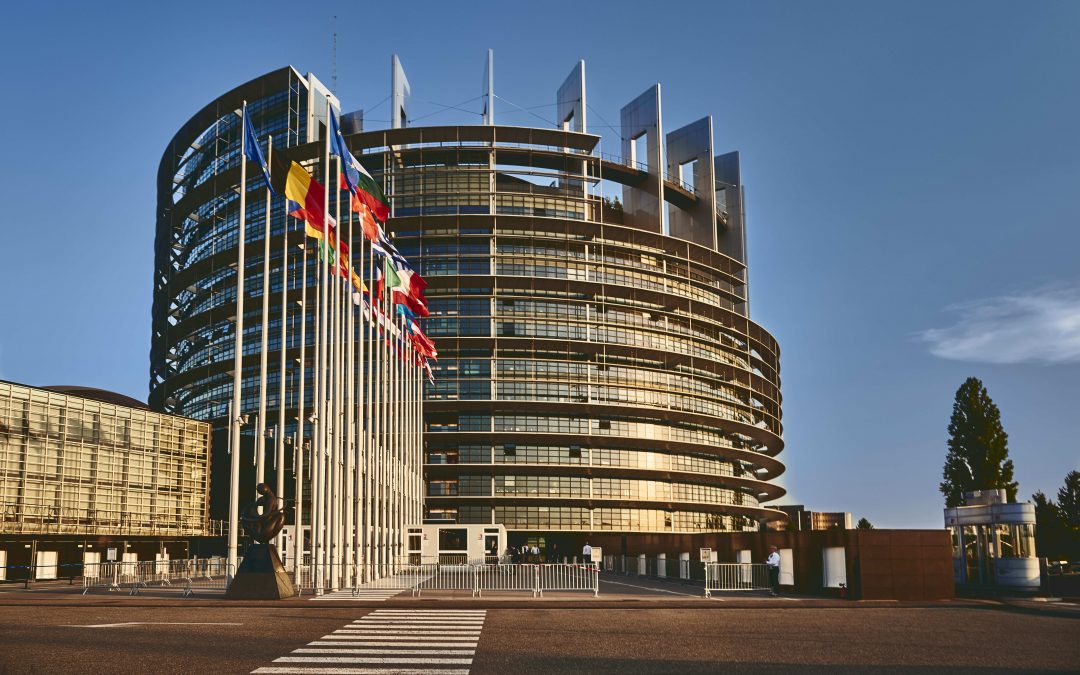
Analysis of the impact of the EU-Mercosur agreement from 3 perspectives: geopolitics, detractors and proponents.
The present article explores several dimensions of the impact of the EU-Mercosur trade agreement, evaluating its impact on European strategic autonomy and industrial competitiveness through the analysis of the following core issues:
- Geopolitical Analysis of the impact of the EU-Mercosur and Economic Realignment
- Agrarian opposition: Analysis of the impact of the EU-Mercosur and regulatory asymmetry
- Industrial supporters: Analysis of the impact of the EU-Mercosur and market liberalization
1. Geopolitical Analysis of the impact of the EU-Mercosur and Economic Realignment
The global economic landscape is currently defined by the growing rivalry between the United States and China.The EU-Mercosur agreement establishes a free trade zone encompassing more than 720 million consumers. The EU-Mercosur agreement repositions Europe as a relevant global actor at a time of intense geopolitical competition not only between these two powers but also against Russia.
China has dominated trade for decades. Consequently, Europe gains a degree of independence it would not otherwise possess. China has also been growing fast and not only represents a great EU competitor, also to Europe. As China expands, it is becoming an important trading partner for Brazil and Argentina, threatening European dependence on essential raw materials such as lithium or graphite.
The United States has historically been a leader in the Western Hemisphere, but its presence in the Latin American market has remained irregular. Moreover, Trump’s administration is applying protectionist trade measures against most countries, including the EU, which is experiencing a loss of competitiveness in the American market due to tariffs upon European exports. In this sense, opening borders with Latin America benefits numerous sectors, such as the automotive, chemical and pharmaceutical, and machinery industries, among others industrial sectors. Therefore, this deal represents a necessary counterbalance to ensure that European industries maintain access to essential raw materials without compromising their strategic position.
Besides China and the US, it is important to look into Russia-EU conflicts and how they affect Western supremacy. Recent conflicts, such as the war in Ukraine and the interest in acquiring Greenland by the Trump Administration, have a geopolitical background linked to the control of strategic natural resources. This includes energy resources such as gas, of which Russia is the world’s second-largest exporter. Russia is also the world’s leading exporter of fertilizers, with Brazil among other countries including members of the Union. Some of these products face strict restrictions on the oldest Continent due to their environmental impact. In economic terms, Ursula von der Leyen, the European commission president, has claimed that tariffs will be imposed on the exporter countries if European standards are not met. Last, but not least, this agreement allows us not only to gain economic influence but also to promote global sustainability and strategic independence.
2. Agrarian opposition: Analysis of the impact of the EU-Mercosur and regulatory asymmetry
Agrarian sectors across Europe have shown significant opposition, characterizing the treaty as a catalyst for unfair competition. The fundamental grievance stems from regulatory asymmetry: while European producers adhere to the world’s most stringent environmental and animal welfare standards, Mercosur counterparts often utilize pesticides and antibiotics banned within the Union.
Protests across Europe are perceived as a response to an existential threat, particularly taking as a reference how French and Spanish producers have been displaced in European markets by the introduction of vegetables and fish products from Morocco. This precedent has generated a collective skepticism among farmers regarding the future of the agricultural sector, which is threatened not only by a lack of generational renewal but also by the difficulty of remaining competitive while facing unfair competition.
Agricultural producers complain against social and environmental dumping, as local producers must comply with a stricter regulatory framework, while importers can operate with less bureaucracy and without the plant-health measures or veterinary drugs banned in the EU.
Detractors also emerge from an environmental perspective, citing the carbon footprint generated by long-distance imports and the perceived risk of deforestation, which jeopardizes the Paris Agreement. In theory, compliance with the EU Deforestation Regulation (EUDR) is non-negotiable. Time will tell whether these good practices are implemented correctly or simply become another bureaucratic formality.
3. Industrial supporters: Analysis of the impact of the EU-Mercosur and market liberalization
Large European companies—industrial, automotive, pharmaceutical, service, and machinery—strongly support the EU-Mercosur agreement, as they stand to be its primary beneficiaries.
Key advantages:
- Elimination of tariffs in South American markets and cost savings. According to the European Commission, the automotive, machinery, chemical, and pharmaceutical industries are expected to save more than €4 billion annually in tariffs, facilitating competition with their US counterparts.
- Access to certain agricultural products, such as luxury French wine, or products with protected designations of origin, such as Manchego cheese.
- The opening of public procurement markets represents a significant opportunity for European firms to compete for government contracts under the same conditions as domestic companies.
- Increased business opportunities for companies in the telecommunications (Telefónica), transportation and infrastructure (Ferrovial), financial services (Santander), and construction sectors—in other words, companies listed on the IBEX 35.
Consequently, in general terms, large corporations see the agreement as an opportunity to increase their exports to a market of 300 million consumers. Furthermore, it improves their global competitiveness in an environment protected from powers like China and the US.